As someone who runs a beauty clinic, I'm in direct contact with skin every day. I work with many clients who want to see themselves looking more vibrant, smoother, and healthier when they look in the mirror. I can say this clearly: retinol, when used correctly, is one of the most powerful ingredients in anti-aging care. However, when used incorrectly, it becomes an ingredient that tires, sensitizes, and can even lead to problems that are difficult to reverse.
I want to share this not with a "everyone uses it, so you should too" mentality, but based on my experiences, observations, and the professional boundaries I adhere to in the clinic.
What is Retinol and Why is it So Effective?
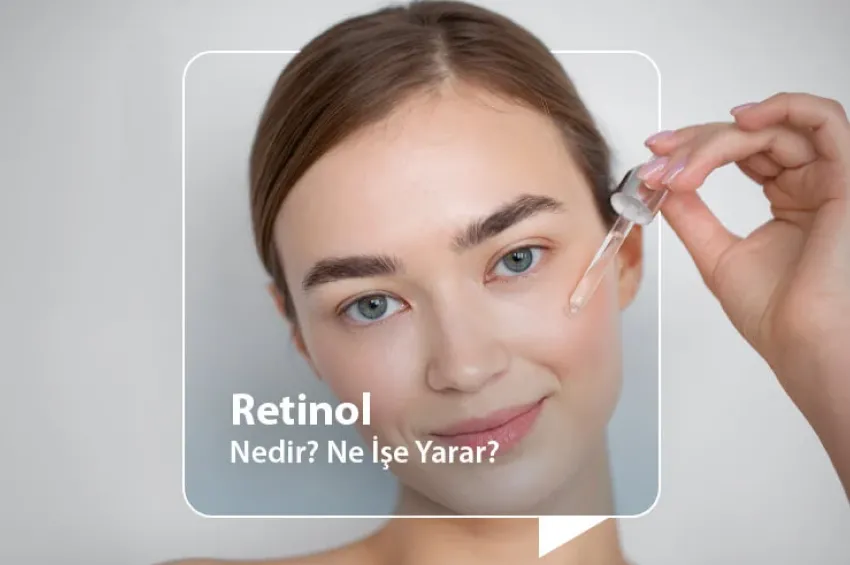
Retinol is one of the active derivatives of vitamin A. I define it for the skin as follows:
A powerful stimulant that activates the skin's cellular memory.
When it comes into contact with the skin:
• Increases the rate of cell renewal • Supports collagen production • Helps reduce the appearance of fine lines and wrinkles • Lightens the appearance of blemishes over time • Supports a cleaner and tighter appearance of pores
The reason it is effective in so many areas is that it works directly at the cellular level. This is what makes it powerful.
Being Powerful Doesn't Mean It's Suitable for Everyone
The most common misconception I encounter in the clinic is:
“The stronger the product, the faster the results.”
Retinol should not be used with this logic. I always tell my clients:
Retinol doesn't like rushing. It requires patience.
When used with the wrong dose, wrong frequency, or wrong combinations:
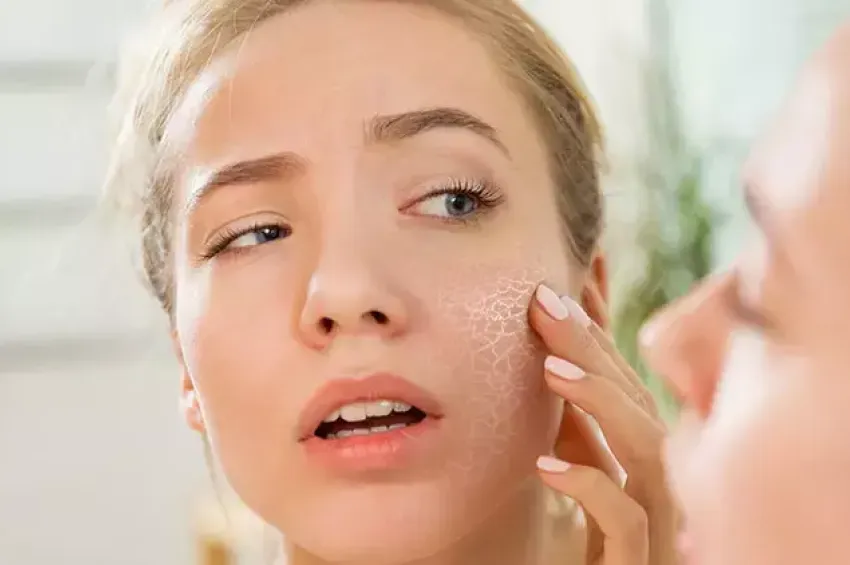
• Redness • Flaking • Burning sensation • Weakening of the skin barrier
problems such as these occur. At this point, retinol is often blamed. However, the problem is not in the ingredients, but in the way it is used.
How Do I Approach Retinol in My Clinic?
For me, retinol:
• Is not recommended for every skin type in the same way.
• Is not the same dosage to start with at every age.
• Is not an ingredient that needs to be used every day.
First, I assess the skin:
• Sensitivity level
• Barrier strength
• History of blemishes, acne, or inflammation
• Sun exposure and lifestyle
Then, I start with the lowest concentration, once or twice a week. As the skin gains tolerance, the frequency of use is gradually increased.
I place great importance on the concept of "the skin getting used to retinol." The skin strengthens not by forcing it, but by gradually persuading it.
My Unwavering Basic Rules for Retinol Use
My clinical approach has some clear guidelines: • Retinol is only used at night. • A barrier-supporting moisturizer must always be applied afterwards. • The retinol process should not begin without using a high-protection sunscreen during the day. • It should absolutely not be used during pregnancy and breastfeeding.
If these rules are neglected, even the highest quality retinol can pose risks to the skin.
Should Everyone Use Retinol?
No.
And I say this with complete confidence as a beauty clinic.
Very sensitive skin, skin with a weak barrier, and skin with active dermatological problems require repair and balancing first. In some skin types, the retinol process is delayed, and in others, it is never started. This is not a deficiency, but a correct understanding of the skin type.
My Final Word
Retinol is not a miracle. But when used by the right person, at the right time, in the right dose, and with the right follow-up, it is one of the most scientifically supported anti-aging treatments.
For me, beautiful skin is:
• Not wrinkle-free
• Not flawless-looking
• Healthy, balanced, and consciously supported skin
Retinol is a tool in this journey. What's really important is knowing when to stop using it on your skin.