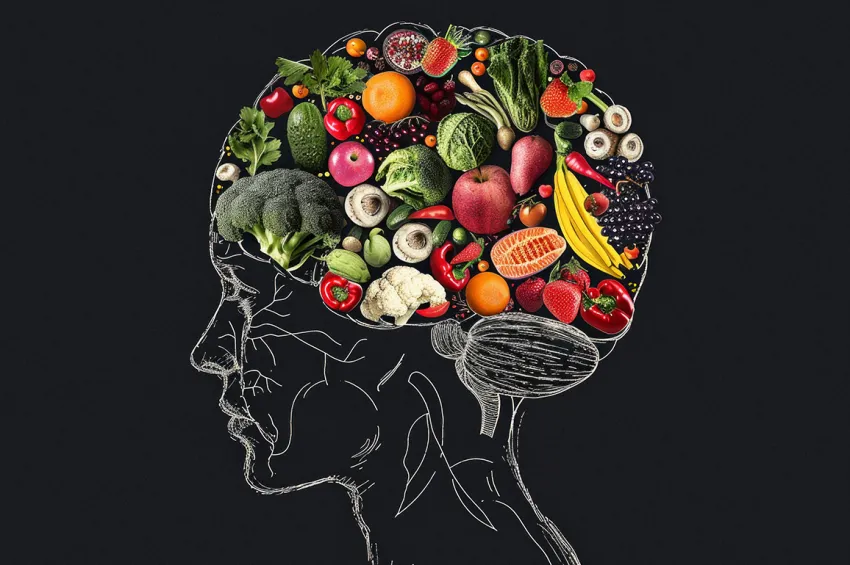
For me, functional nutrition isn't a diet plan, it's a form of awareness. For years, I focused on the question of "what should I eat, what shouldn't I eat," but I realized early on that the real question was "what is my body telling me?" When I first encountered functional nutrition, the first thing I felt was this: For the first time, someone wasn't trying to force me into general patterns. For the first time, I was being asked to cooperate with my body.
I see functional nutrition not as an approach to suppressing illness, but as one that seeks to understand the body. The goal here isn't just to lose weight or prepare "healthy"-looking plates. The goal is to understand why the body is struggling, why it's giving warning signals, why it's tired. Because the body doesn't make mistakes. It only tells us that something isn't right.
The classic understanding of nutrition generally states:
"The right nutritional model for everyone."
In functional nutrition, however, the question is:
"What is right for you?"
I find this very valuable. Because a person's digestion, hormones, immunity, nervous system, past traumas, stress levels, sleep quality, and even relationships all affect their nutrition. The same food can be a cure for one person and a burden for another. Functional nutrition centers on this individuality.
This is what I learned from functional nutrition:
Symptoms are not enemies, they are messages.
Bloating, fatigue, skin problems, palpitations, anxiety, brain fog… None of these are coincidences. They are the body's way of saying, "Listen to me."
In functional nutrition, there are more "whys" than "prohibitions."
Why does this food tire you out?
Why does your sugar craving increase?
Why can't you wake up hungry in the mornings?
Why do you feel addicted to caffeine?
Any diet that doesn't ask these questions is just symptom dressing.
The most transformative difference for me was this:
Food is not just calories. It's information.
Every bite carries a message to the cell.
It can say, "You are safe,"
or, "You are under threat."
Functional nutrition also takes the nervous system into account.
Because a body under stress cannot digest food, no matter how high-quality it is.
I've experienced this firsthand. Even during the periods when I ate the "cleanest" food, I could still feel exhausted. Because my body was at war. The functional perspective taught me this: Trust comes first, then digestion.
In functional eating, there are things as important as the plate: Sleep, Sunlight, Breathing, Emotional burden, Relationship stress, Daily routine.
No diet that ignores these can truly be healing.
With functional eating, I changed my perspective on food.
I no longer control my food, I listen to it.
Instead of saying, "I shouldn't eat this,"
I say, "How is my body reacting to this?"
This liberated me. Because guilt decreased, curiosity increased.
Curiosity heals.
Guilt only makes the body more tense.
Functional eating doesn't demand perfection, it demands harmony.
It doesn't expect you to eat perfectly every day.
But it wants you to connect with your body every day.
Sometimes I do this:
After eating, I stop and ask myself:
Did my energy increase or decrease? Did my insides expand or contract?
Did my mind open up or become clouded?
These small observations gradually create an incredible body intelligence.
Functional nutrition allows a person to become an expert in their own biology.
It invites you to be someone who deciphers the language of your own body, not someone who follows external prescriptions.
I now know this:
Healing happens with compassion, not pressure.
It happens with understanding, not force.
It happens with adaptation, not restriction.
Functional nutrition didn't just teach me what to eat.
It taught me how to relate to myself.
And perhaps most importantly:
It taught me to trust my body.