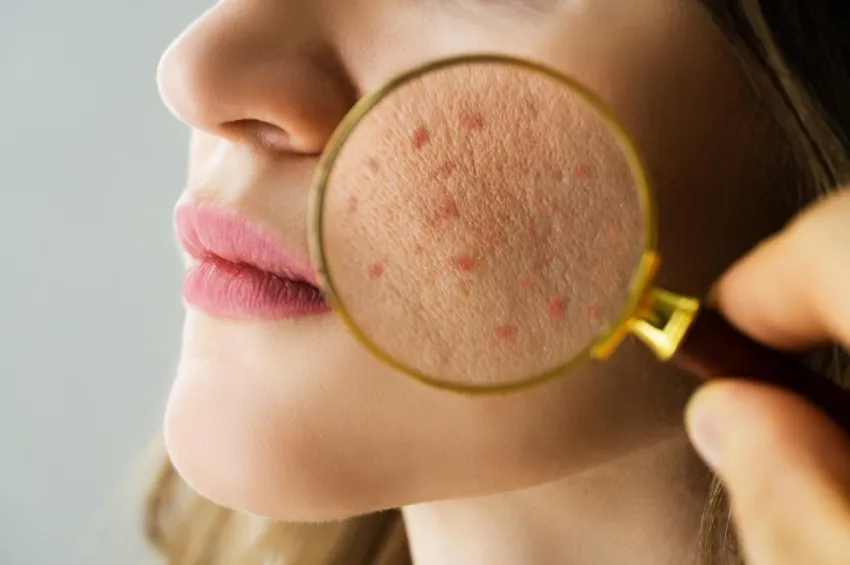
My approach to skincare aimed at reducing acne scars is one of the most important aspects of my professional practice. I believe that understanding the skin's physiology and prioritizing barrier health is crucial in this process. Because scars are often not just a superficial problem; they are a response of the skin after inflammation.
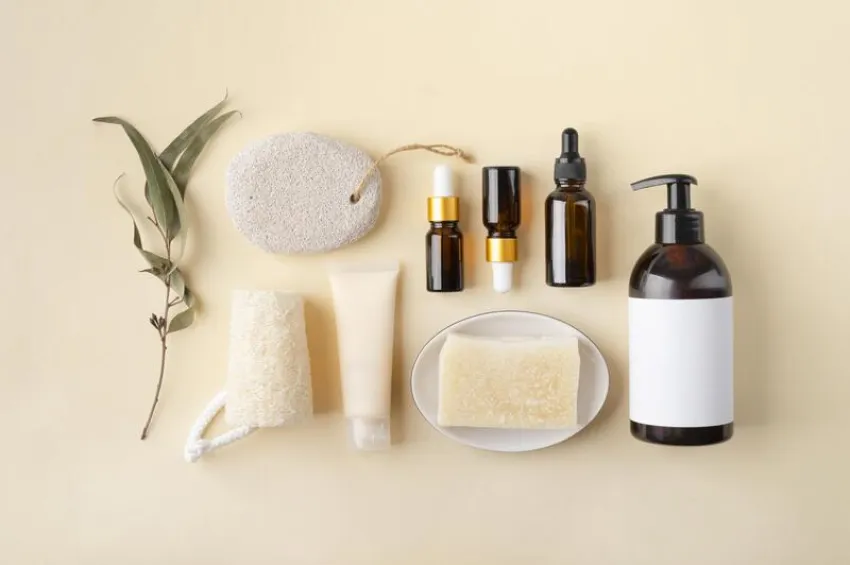
For me, it all starts with proper cleansing. My goal is never to provide aggressive cleansing. On the contrary, I aim to remove excess sebum and accumulated residue while protecting the skin's natural barrier. Therefore, I prefer to work with gentle, pH-balanced cleansers. If the skin feels tight after cleansing, I can clearly say that the cleansing wasn't done correctly.
One of the most critical aspects of reducing scar appearance is controlled exfoliation. My approach here is entirely based on the skin's needs. AHA and BHA ingredients, when used at the correct concentration and frequency, support epidermal renewal and contribute to the lightening of uneven skin tone. However, I observe that the most common mistake is over-application. Excessive exfoliation can disrupt the barrier and, conversely, increase discoloration.
On the active ingredient side, retinoids hold a significant place in my routine. Thanks to their ability to accelerate cell turnover, they provide noticeable improvement in both post-inflammatory marks and skin texture. However, I always emphasize the importance of gradual progress and careful skin observation when using retinol. If moisturizing and barrier support are neglected in skin treated with retinoids, the opposite of the desired benefits can occur.
I consider moisturizing not just a supportive step, but an integral part of the treatment. Without a healthy barrier, you can't get maximum benefit from any active ingredient. Therefore, I prioritize products containing ceramides, hyaluronic acid, and soothing ingredients in my routine.
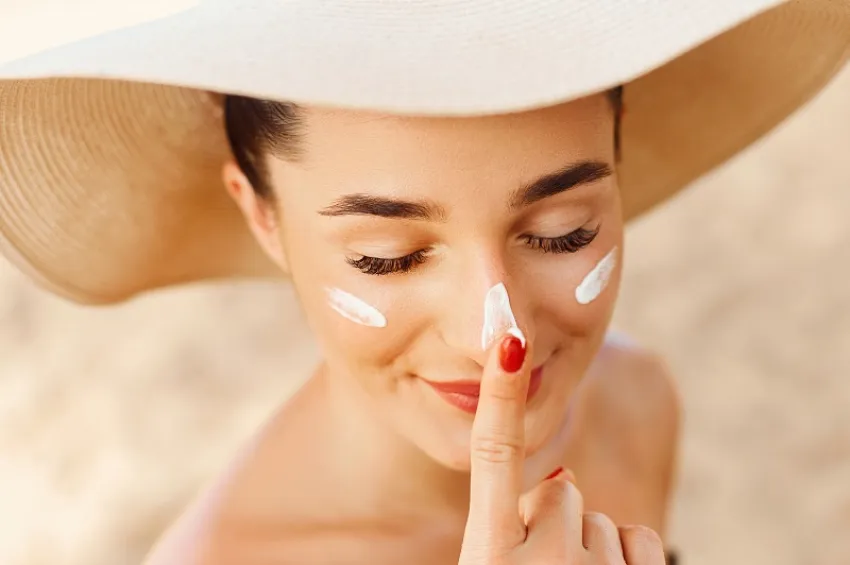
Sun protection is undoubtedly the most critical step. When it comes to post-inflammatory hyperpigmentation, UV exposure is one of the biggest factors increasing the permanence of marks. Therefore, I particularly emphasize the need for regular application of a broad-spectrum sunscreen every day, year-round. Neglecting this step significantly reduces the effectiveness of all other treatments.
Based on my clinical observations, I can say that success in treating acne scars depends on... It's not about aggressive treatments, but about a well-planned, sustainable, and skin-friendly routine. Because every skin's tolerance and needs are different, a personalized approach is always my priority instead of a standard protocol.